
 The Climate Factors Working Against Your Deck
Wood decks in Austin and Central Texas have a shorter effective lifespan than those built in cooler, less intense climates. This is not a material defect or a construction problem. It is the result of environmental conditions that accelerate deterioration on every outdoor wood surface. Understanding what causes premature failure helps you maintain your existing deck more effectively and make better decisions about repair vs replacement when the time comes.
We have been building, repairing, and replacing wood decks across Austin for over 13 years. The failure patterns we see are consistent and predictable. Here are the specific environmental factors that shorten wood deck lifespans in this particular region and what you can do about each one.
UV Exposure
Austin’s UV index reaches extreme levels during summer and stays elevated from April through October. UV radiation breaks down the lignin in wood, the natural polymer that gives it strength and color. As lignin degrades, the wood surface grays, becomes brittle, and develops surface cracks called checking. These checks start shallow but deepen over time, allowing moisture to penetrate the grain.
Stain with UV-blocking pigments is the primary defense. It absorbs UV radiation before it reaches the wood surface. But stain degrades too. In Austin’s UV conditions, even high-quality stain breaks down faster than in northern climates. That is why staining every two to three years is critical here, rather than the four to five-year intervals recommended in milder regions.
Expansive Clay Soil
Most of the Austin metro sits on expansive clay soil that swells when wet and contracts when dry. This seasonal volume change causes ground movement, transferring stress to deck footings year after year. Footings set at the minimum depth gradually lose their anchorage as the soil pushes and pulls around them. Posts begin to shift, the deck develops uneven sections, and structural connections at every level absorb stress they were not designed for.
Footing failure caused by clay soil is the most common structural problem we see on older Austin decks. It is preventable with properly engineered footings during construction. Still, many decks built 10 to 20 years ago used standard-depth footings that were not designed for the level of soil movement this region produces. Our guide on deck footing and Austin soil covers the engineering principles.
Heat Cycling
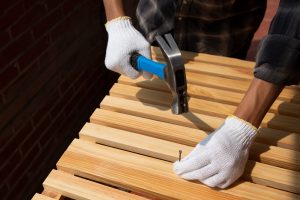
Austin summer temperatures routinely exceed 100 degrees, and deck surfaces in direct sun can reach 140 to 160 degrees. When the sun goes down, the surface temperature drops 50 degrees or more. This daily heating and cooling cycle causes wood to expand and contract repeatedly, which loosens fasteners, stresses joints, and gradually weakens the connections between boards and framing.
The effect compounds over the years. Nails and screws that were tight at installation work loose. Board gaps widen. Joist hangers and structural connectors experience micro-movement at their bolt holes. None of these changes is dramatic in any single season. Still, after 10 to 15 years of daily cycling, the cumulative structural effect is measurable and contributes to the overall loosening of the deck system.
Moisture and Rot
Austin receives enough rainfall, particularly in spring and fall, to keep moisture in play as a factor in deterioration. Rain penetrates any crack, check, or gap in the wood surface and reaches the grain underneath. Once moisture enters the wood, it creates conditions for fungal growth and rot, especially in areas that do not dry quickly: the bottom of posts, the ends of joists where they rest on beams, and any framing that sits close to the ground without adequate airflow.
Ground-level decks with limited ventilation underneath are the most vulnerable. The trapped moisture between the framing and the soil creates a microclimate that accelerates rot even on pressure-treated lumber. Elevated decks have better airflow and dry faster, which is one reason they tend to last longer in this climate.
How to Extend Your Wood Deck’s Life
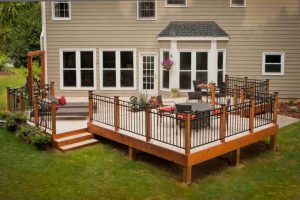
Regular professional staining every two to three years is the most impactful thing you can do. Beyond staining, keep the deck surface clean and free of debris that traps moisture. Ensure the substructure has adequate ventilation. Repair damaged boards promptly before moisture reaches the framing underneath. Address any loose fasteners or connections before they become structural problems.
If your deck is 15 to 20 years old and showing multiple signs of deterioration, a professional assessment from our deck repair team can help you determine whether continued maintenance is practical or whether replacing it with more durable materials is the smarter investment.
The Composite Alternative
Composite decking was engineered specifically to solve the problems wood decks face in demanding climates. Composite does not absorb UV, does not absorb moisture, does not rot, and does not cycle with temperature the way wood does. For homeowners who are tired of the maintenance cycle or replacing a failed wood deck, composite decking eliminates most of the failure modes described in this guide.
Get Your Deck Assessed
Not sure where your deck stands? We provide free assessments across Austin and all surrounding areas. Schedule yours.