
 Lifespan, Durability, and What Affects Performance in Austin
Composite decking is designed to outlast wood in demanding climates, and Austin’s heat, UV, and moisture cycles are exactly the conditions composite was engineered to handle. The short answer is 25 to 50 years depending on the brand and product line. The longer answer involves understanding what affects that lifespan and how to maximize it on your specific property. Our composite deck installation page covers the full scope of brands and options we offer.
We have been installing composite decks across Austin for over 13 years and can speak to real-world performance based on years of follow-up with homeowners and observation of how boards age in Central Texas conditions.
Warranty Coverage by Brand
Trex Transcend carries a 25-year fade-and-stain warranty plus a 25-year limited structural warranty. Trex Enhance and Select carry comparable structural coverage with slightly less comprehensive fade and stain protection. TimberTech PRO offers 30-year structural and 25-year fade-and-stain warranties. TimberTech AZEK extends coverage further with additional moisture protection. Fiberon offers 25-year warranties on its premium lines. These warranty periods reflect the manufacturer’s confidence in the product, but the actual lifespan typically exceeds the warranty coverage.
What Austin’s Climate Does to Composite
UV Exposure
UV is the primary environmental factor that affects composite boards over time. Austin’s UV index is among the highest in the country during the summer months. Premium composite boards include UV inhibitors in their cap layer that absorb radiation before it reaches the core material. This slows color change significantly compared to unprotected wood. Some gradual color mellowing is normal over the first year or two as the boards weather, but it stabilizes after that. Lighter colors show less visible change than darker colors in full-sun installations.
Heat
Austin summers routinely push past 100 degrees, and deck surfaces in direct sun can get considerably hotter. This heat does not cause structural degradation in composite boards. The polymer and wood fiber blend is engineered for heat resistance. The boards may feel warm underfoot, but they do not warp, cup, or lose structural integrity from heat exposure the way wood does. The main practical impact of heat is barefoot comfort, which is why we recommend lighter colors for full-sun decks.
Moisture
Composite boards do not absorb moisture the way wood does. The polymer cap prevents water penetration, which means no swelling, no rot, and no conditions for mold to develop on the surface. This is a significant advantage in Austin, where seasonal rain creates moisture cycles that damage wood decks over time. The one exception is the cut board ends, where the cap is absent. Properly installed composite decks minimize exposed cut ends, and we use end caps or seal cut ends as part of our standard installation process.
What Actually Shortens Composite Lifespan
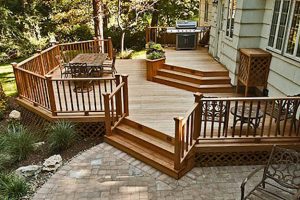
The boards themselves are rarely the failure point on a composite deck. The most common problems that shorten the effective lifespan of a composite deck are substructure-related. Improper joist spacing causes board deflection and fastener stress. Inadequate footing engineering, especially on Austin’s clay soil, leads to structural shifting and settling. Poor drainage allows standing water to pool on the surface and in the framing, which can cause framing rot even though the composite boards above are fine. Our guide on deck footing and Austin soil explains why the foundation matters as much as the surface material.
This is why proper installation matters more than brand selection for long-term performance. A well-installed deck with any reputable composite brand will outlast a poorly installed deck with a premium brand. We engineer every composite deck project for Austin’s specific conditions, including soil, drainage, and UV exposure.
Composite vs Wood Lifespan in Austin
The lifespan comparison is stark. Pressure-treated wood in Austin lasts 15 to 20 years with regular maintenance. Cedar lasts 20 to 30 years with consistent staining. Composite lasts 25 to 50 years with near-zero maintenance. The total cost of ownership over 25 years often favors composite because you eliminate the cumulative cost of staining, sealing, and board replacement that wood decks require. For a deeper look at the cost tradeoffs, see our post on what factors affect deck cost in Austin.
Maximizing Your Composite Deck’s Life
Keep the surface clean by sweeping debris regularly and washing with soap and water a few times per year. Address any drainage issues that allow water to pool on the surface. Inspect the substructure periodically, especially footings and joist connections, since the framing is typically pressure-treated wood even on a composite deck. If you notice any structural shifting or settling, address it promptly. The composite boards will last decades, but the pressure-treated wood framing underneath them needs the same attention and periodic inspection as any wood structure in Austin’s demanding climate.
Ready to Invest in Composite?
We install Trex, TimberTech, and Fiberon across Austin and all surrounding areas. Free estimates include material comparison, design discussion, and a detailed written quote. Schedule yours.