
 Warning Signs That Go Beyond Surface Wear
Surface wear on a deck is easy to spot: faded boards, splinters, loose railing spindles. Structural damage is different. It affects the load-bearing components that keep the deck safe and stable, and it is often hidden beneath the walking surface where homeowners cannot easily see it. If you have an older deck in Austin or one that has not been regularly maintained, knowing what to look for can help you catch problems before they become dangerous. Our deck repair services address everything from surface fixes to full structural restoration.
We have been assessing and repairing decks across Austin for over 13 years. This guide covers the warning signs we look for during every inspection and explains what each one means for your deck’s health.
Soft or Spongy Spots
When you walk across your deck and feel a section give more than it should, that is a sign of compromised framing underneath. Soft spots usually mean the joist or beam below that area has rot, insect damage, or lost structural integrity due to moisture exposure. The decking boards on top may look fine, but the support beneath them is failing.
In Austin, the most common cause of soft spots is moisture damage to joists that are not properly ventilated or sit too close to the ground, where airflow is limited. Ground-level decks are especially vulnerable because the space between the framing and the soil traps moisture, creating conditions that allow rot to develop faster.
Leaning or Shifting Posts
Posts that are visibly leaning, tilting, or have shifted from their original position indicate footing failure. The footings are the concrete foundations buried in the ground that anchor the posts. When footings are not deep enough or wide enough for the soil conditions, they lose their grip over time. In Austin, the expansive clay soil is the primary culprit. The soil swells when wet and contracts when dry, creating a seasonal push-pull cycle that gradually dislodges shallow footings. Our guide on why deck footing matters for Austin soil explains the mechanics in detail.
Leaning posts are not just a cosmetic problem. They mean the load path from the deck surface to the ground is compromised. The deck is no longer transferring weight straight down through the posts to the footings as designed. This creates stress on every connection point above the failed footing.
Sagging or Uneven Sections
A deck that visibly sags in certain areas has either joist failure, beam failure, or footing settlement in that area. You can sometimes see this from ground level by looking at the underside of the deck. Sagging joists will bow downward between their supports. Sagging beams will curve under the load they carry. Both conditions worsen over time as the weakened member deflects more.
Uneven sections where one part of the deck sits lower than another often indicate differential settlement, meaning some footings have shifted more than others. This is common on Austin properties with variable soil conditions where one side of the deck sits on deeper clay than the other.
The Ledger Board Connection
The ledger board is the horizontal member that attaches the deck to the house. It is the most critical connection on any attached deck because it carries roughly half the total load. A failing ledger board connection is the most dangerous structural problem a deck can have. Signs include a visible gap between the deck and the house wall, water stains or rot at the connection point, and any movement or flex when you push against the deck near the house.
Ledger board failures are the leading cause of catastrophic deck collapses nationwide. The connection must use lag bolts or through-bolts into the house framing, not nails or screws. Proper flashing must prevent water from entering the joint. If your deck was built before modern code requirements for ledger connections, or if you see any signs of deterioration at this joint, it warrants immediate professional assessment.
Bouncing and Excessive Flex
A deck that bounces when you walk on it or noticeably flexes under load may have undersized joists, joist spans that exceed the allowable distance for the lumber size, or joists that have lost stiffness from rot or insect damage. Some flex is normal on any wood structure, but if the deck feels noticeably springy or if you can see the surface deflect when people walk across it, the framing needs evaluation.
Rot in Load-Bearing Members
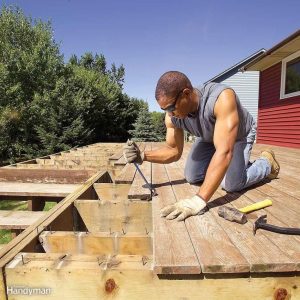
Rot in decking boards is a surface problem. Rot in joists, beams, and posts is a structural problem. You can test for rot by probing wood with a screwdriver or awl. Healthy wood resists penetration. Rotted wood gives way easily and feels soft or crumbly. Pay particular attention to the bottoms of posts where they contact the ground, the ends of joists where they rest on beams, and any location where water tends to collect.
When to Call a Professional
If you identify any of the signs above, a professional assessment is the next step. We check all structural components, including footings, posts, beams, joists, the ledger connection, and the overall framing condition. If targeted repair can address the problem, we tell you exactly what needs fixing. If the damage is widespread enough that full replacement makes more financial sense, we explain why. Our post on when to repair vs replace your Austin deck covers the decision framework in detail.
Get a Free Structural Assessment
We evaluate the full structure, not just the surface. Free assessments are available across Austin and all surrounding areas. Schedule yours.