
 The Premium Hardwood Option for Homeowners Who Want the Best
Ipe is the most durable, beautiful, and most expensive wood decking material available. It is a tropical hardwood so dense that it barely floats in water, rated for 40 to 75 years of outdoor service, and naturally resistant to rot, insects, and moisture without any chemical treatment. For Austin homeowners who want the absolute best natural wood deck and are willing to invest in it, ipe is in a category of its own. Our wood deck builders page covers all the wood species we work with, including ipe and other exotic hardwoods.
We have been building decks across Austin for over 13 years, including ipe projects for homeowners who demand the highest quality. This guide covers what makes ipe different, how it performs in Austin, and whether the premium is justified for your specific situation.
What Makes Ipe Different
Ipe, also known as Brazilian walnut, is a tropical hardwood from Central and South America. Its defining characteristic is density. Ipe is roughly three times denser than pressure-treated pine and nearly twice as dense as cedar. This density gives it extraordinary hardness, natural resistance to degradation by everything that affects other woods, and a weight that requires stronger substructure engineering.
The appearance is distinctive. Ipe has a rich, deep color that ranges from olive brown to dark reddish-brown with fine grain lines. The surface is smooth and tight, with none of the open-grain texture of softwoods. When oiled, the color is vibrant and warm. When left to weather naturally, it develops a silver-gray patina that many homeowners find equally attractive.
Ipe in Austin’s Climate
UV Performance
Ipe handles Austin’s UV exposure better than any other wood. The dense grain and natural oil content significantly slow UV penetration. Ipe will still gray over time without oil application, but the surface does not crack, check, or deteriorate the way softwoods do under the same UV conditions. Homeowners who want to maintain the natural color apply ipe oil once or twice a year. Those who prefer the gray patina can skip oiling entirely without compromising the wood’s structural performance.
Moisture and Rot Resistance
Ipe is naturally resistant to moisture absorption, fungal growth, and insect damage. The wood is so dense that moisture barely penetrates the surface. This makes ipe an excellent choice for pool decks, waterfront applications, and any area with consistent moisture exposure. In Austin, where seasonal rain creates moisture cycles that rot softer woods over time, ipe’s resistance is a significant advantage.
Heat
All deck surfaces absorb heat in direct sun, and ipe is no exception. The dark color of ipe means it absorbs more heat than lighter materials. In Austin’s summer, ipe surfaces can get hot enough to be uncomfortable for bare feet in direct sun. This is one tradeoff to consider, especially for pool decks. Lighter composite colors stay measurably cooler in the same conditions.
Installation Complexity
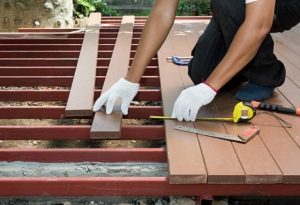
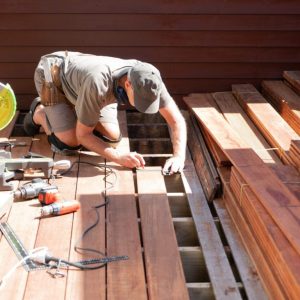
Ipe is significantly more difficult to work with than any other decking material. Every fastener hole must be pre-drilled because the wood is too hard for screws to penetrate without splitting. Cutting requires carbide-tipped blades and generates more wear on equipment. The weight of ipe boards is roughly double that of cedar, which affects handling and sometimes requires a heavier substructure. All of this adds labor time and cost to the installation. Our deck installation process accounts for these requirements on every hardwood project.
Cost Reality
Ipe is the most expensive decking material we install. The material cost per board foot is substantially higher than that of cedar, pressure-treated wood, or even premium composite. The labor cost is also higher due to pre-drilling, specialized cutting, and heavier handling requirements. For a typical residential deck, Ipe can cost two to three times as much as the same design in composite and three to four times as much as in pressure-treated wood.
The counterargument is lifespan. Ipe can last 40 years or more with minimal structural maintenance. Over that span, a single ipe deck outlasts two pressure-treated decks and potentially one and a half cedar decks. If you amortize the cost over the full lifespan, the per-year cost of ipe is not as extreme as the upfront number suggests. But the upfront investment is real and significant.
Ipe vs Composite
The most relevant comparison for Austin homeowners is ipe vs premium composite. Both are at the top of their respective categories. Ipe offers unmatched natural beauty, the longest lifespan of any wood, and a character that synthetic materials cannot fully replicate. Composite offers near-zero maintenance, stays cooler in the sun, and costs less. For a broader comparison of materials, see our materials guide for Texas weather.
Who Should Consider Ipe
Ipe makes the most sense for homeowners building high-end outdoor spaces in premium neighborhoods like West Lake Hills, Lakeway, and Bee Cave, where the architectural character and home values align with a premium material investment. It also works well for pool decks, where natural slip resistance is an advantage, and for any project where the homeowner values natural wood character above all other factors.
Get an Ipe Deck Estimate
We source ipe from certified suppliers and handle the specialized installation requirements. Free estimates include material comparison and a written quote. Schedule yours.