
 Tiered Designs That Work With Austin’s Terrain
A sloped backyard is not a limitation. It is an opportunity. Multi-level deck designs turn grade changes into distinct outdoor zones that serve different functions at different elevations, all connected by stairs and transitions that make the entire space feel intentional and cohesive. Our custom deck-building team designs tiered decks throughout Austin, from gentle suburban slopes to steep Hill Country terrain.
Austin’s landscape is full of sloped lots, especially in the western portions of the metro and the Hill Country edge. Rather than spending thousands on grading and retaining walls to create a flat surface, a multi-level deck works with the existing terrain and creates more usable space than a single flat platform ever could. This guide covers design ideas, functional zoning, and considerations before building a tiered deck on your property.
Zone-Based Design
Upper Level: Dining and Cooking
The upper tier of a multi-level deck typically sits closest to the house and serves as the primary dining and cooking zone. This is where the grill station goes, where the dining table sits, and where the easiest access point is from the kitchen door. Keeping the cooking and dining zone at the highest level makes sense because it minimizes the distance food and drinks need to travel from inside. It also provides the best vantage point over the rest of the deck and the yard below. On lots with views, the upper tier is where you take advantage of the elevation and sight lines that the slope provides.
Middle Level: Lounging and Entertaining
The middle tier, if the grade change supports three levels, becomes the social and relaxation zone. This is where lounge seating, conversation areas, and any fire pit or fireplace feature work best. The slightly lower elevation creates a sense of separation from the dining level without disconnecting from it. Guests naturally flow between levels, and the elevation change creates visual interest that a single flat surface cannot provide.
Lower Level: Garden Transition and Features
The lowest tier transitions the deck to the yard and landscape. This level often includes built-in bench seating along the perimeter, planter boxes that blend the deck into the surrounding garden, or a dedicated feature like a hot tub pad or a small meditation area. On lots with significant grade changes, the lower level may sit several feet below the upper level, creating a private, sheltered space that feels separated from the main entertaining area above.
Stair and Transition Design
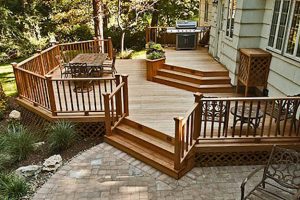
Stairs are the connective tissue of a multi-level deck, and their design matters as much as the platforms themselves. Wide stairs with deep treads feel welcoming and serve as casual seating during gatherings. Narrow, steep stairs feel utilitarian and discourage movement between levels. We design stairs to be generous enough that people use them naturally as part of the outdoor flow rather than treating them as an obstacle between zones.
Landing platforms between levels serve as natural pause points and can be designed as small, functional areas in their own right. A landing between the upper and middle tiers might hold a small side table and a pair of chairs, creating an intimate spot that belongs to neither level. These transitional spaces add richness to the overall design without requiring significant additional square footage. We find that homeowners use these small intermediate areas more than they expect, often making them their favorite spots for a quiet morning coffee or an evening drink away from the main gathering zones.
Engineering for Austin Slopes
Each level of a multi-level deck needs its own independent footing system designed for the specific grade at that point on the lot. Austin’s expansive clay soil adds complexity because the soil movement varies across the slope. The upper portion of a sloped lot may have different clay characteristics than the lower portion. We assess soil conditions at each footing location and engineer depths based on the specific ground conditions at that point on the slope. This site-specific approach prevents differential settling, which causes multi-level decks to shift unevenly over time. Our guide on deck footing and Austin soil covers the mechanics in detail.
Properties in Lakeway, Bee Cave, and West Lake Hills often have steeper slopes and may contain limestone near the surface, requiring drilling rather than excavation for footing placement. These conditions add cost but create the most dramatic multi-level outdoor spaces.
Materials for Multi-Level Decks
Composite decking is the most practical material choice for multi-level builds because every tier is equally low-maintenance. On a three-level deck, the maintenance burden of staining wood multiplies across every surface, stair tread, and railing section. Composite eliminates that multiplication. Cedar and hardwood are viable choices for homeowners willing to invest in the upkeep across multiple levels.
Get a Multi-Level Deck Design
Every sloped lot presents different opportunities. We visit your property, walk the terrain, and design a tiered layout tailored to your specific grade change and how you want to use each zone. Schedule your free estimate.