
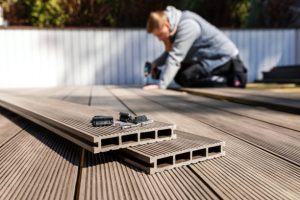
What Actually Costs Less Over 15 to 25 Years in Austin
The upfront price difference between composite and wood decking is real and significant. Composite costs more to install. But upfront cost is only part of the equation. The total cost of owning a deck over its full lifespan includes the initial build, recurring maintenance, periodic repairs, and eventual replacement. When you add all of those together over 15 to 25 years in Austin’s demanding climate, the numbers tell a different story than the initial quote suggests.
We have been building both composite and wood decks across Austin for over 13 years. This comparison uses actual real-world maintenance patterns we observe in this specific market, not national averages or manufacturer claims.
Upfront Cost
Composite decking material costs 30 to 60 percent more per square foot than pressure-treated pine. Compared to cedar, the gap is smaller because cedar already commands a premium over pressure-treated wood. Compared to exotic hardwoods like ipe, composite is actually comparable or less expensive.
Labor costs are similar for both materials. The framing and substructure are identical regardless of the surface material, and the installation labor for composite and wood boards takes comparable time. The main upfront cost differences are in the decking boards, fastener systems, and railing materials used on the project. Hidden fastener systems used on composite cost more than the screws used on wood, and composite railing systems are more expensive than wood railings.
Year 1 Through Year 5: Maintenance Kicks In
For the first few months, both materials look great and require no attention. The divergence starts with the first staining cycle. Wood decks in Austin need professional staining every two to three years. Each staining job includes surface preparation, product application, and drying time. The cost per application depends on deck size but represents a meaningful recurring expense.
Composite decks during this same period need occasional cleaning with soap and water. That is it. No staining, no sealing, no sanding. The maintenance cost for the composite in years 1 through 5 is effectively zero, aside from basic cleaning.
Year 5 Through Year 15: The Gap Widens
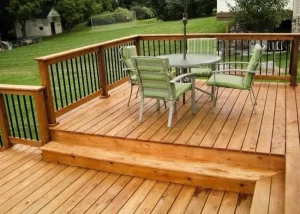
By years 5 to 7, most wood decks in Austin have had two to three professional staining cycles. Some boards may have started to warp, crack, or show wear that requires individual replacement. Pressure-treated decks in full sun exposure often need their first board replacements in this window. Cedar holds up better but still needs the same staining investment.
By years 10 to 12, the cumulative maintenance cost for a wood deck starts to approach the original upfront premium that a composite deck would have cost. This is the crossover point at which composite ownership becomes cheaper than wood on a total cost basis. The exact timing depends on deck size, wood type, sun exposure, and local staining costs, but for most Austin decks, the crossover occurs somewhere in the 8- to 12-year range. After that point, each additional year of ownership further tilts the total cost advantage toward the composite, as maintenance savings continue to accumulate. In contrast, the composite surface requires nothing beyond occasional cleaning.
Composite decks during this same period still need only occasional cleaning. The boards have not faded significantly, warped, or required replacement. The substructure may need a spot check since the framing is pressure-treated wood, but the composite surface is essentially maintenance-free.
Year 15 and Beyond: Replacement Horizon
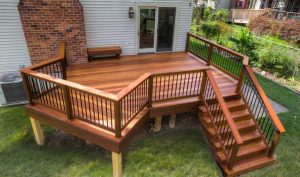
Pressure-treated wood decks in Austin typically reach the end of life at 15 to 20 years. By this point, even well-maintained decks have accumulated enough wear, board replacements, and structural settling that full replacement becomes the practical path. That replacement cost is essentially the cost of a second deck.
Cedar decks last 20 to 30 years with consistent maintenance, so they push the replacement horizon further out. But the cumulative staining and repair costs over those additional years are substantial. By the time a cedar deck reaches 20 to 25 years, the total spent on maintenance may rival what a composite deck would have cost upfront. For a broader comparison of material performance, see our materials guide for Texas weather.
Composite decks from years 15 to 20 are typically still performing well, with no structural issues in the decking material itself. Most are still within their warranty period. The boards may show some subtle color mellowing from UV exposure, but nothing that affects function or requires intervention. The first composite deck is still the only deck you have purchased.
The Bottom Line
If you plan to own the home for 10+ years, composite is almost always cheaper on a total cost basis, despite the higher upfront price. If you plan to sell within 3 to 5 years, the calculus changes because you may not own the home long enough for the maintenance savings to offset the upfront premium. In that case, your decision should factor in the difference in resale value, which our post on whether decks add home value in Austin covers in detail.
Get Both Options Quoted
We provide side-by-side quotes for composite and wood on the same design so you can compare with real numbers for your specific project. Schedule your free estimate.