
 How Outdoor Living Space Affects Resale and Buyer Appeal
Austin homeowners considering a deck often ask whether the investment pays back at resale. The short answer is yes. A well-built deck consistently ranks among the top exterior improvements for return on investment in residential real estate. In Austin’s market, where outdoor living is a year-round lifestyle rather than a seasonal bonus, the impact is even stronger. Our deck installation services are designed to build decks that deliver both daily enjoyment and long-term value.
This guide covers how decks affect home value in the Austin market specifically, which factors drive returns, and how to maximize the value your deck adds.
The National Data
National remodeling cost-versus-value studies consistently show that deck additions recover 60 to 80 percent of their cost at resale. Wood decks and composite decks both perform well in these studies, with composite trending upward in recent years as buyer awareness of low-maintenance benefits has grown. These numbers represent averages across all US markets, and actual returns vary significantly by local conditions.
Why Austin Is Above Average
Austin’s deck ROI likely exceeds national averages for several reasons specific to this market. The climate supports outdoor living for 10 to 12 months per year, meaning a deck is usable space nearly year-round rather than a seasonal amenity. The city’s outdoor culture, parks, trails, and active lifestyle create buyer expectations for functional outdoor space. And Austin’s housing market remains competitive enough that features like a quality deck differentiate a listing from comparable homes in the same subdivision.
In neighborhoods like Cedar Park, Round Rock, and Lakeway, where homes in the same subdivision share similar floor plans and interior finishes, outdoor living space becomes a primary differentiator. A home with a well-built deck and a functional outdoor room stands out from otherwise identical listings with a bare concrete patio or an empty backyard.
Material Choice and Value

Composite decking tends to add more perceived value at resale than wood. Buyers recognize that a composite deck means no staining, no sealing, and no immediate maintenance obligation. It signals a move-in-ready outdoor space rather than a project the new owner inherits. The visual appeal of premium composite brands like Trex and TimberTech also photographs well for listings, which matters in a market where buyers make initial decisions based on online photos.
Cedar and other natural-wood decks also add value, but the condition at the time of sale matters more with wood than with composite decking. A freshly stained cedar deck with no visible wear adds strong value. A neglected cedar deck with gray, cracked boards may actually detract from buyer perception even if the structure underneath is sound. If you plan to sell within a few years and have a wood deck, investing in professional staining before listing is one of the highest-ROI pre-sale improvements you can make.
Size and Features
Bigger is not always better in terms of value. A deck that is proportional to the home and lot size adds more value than an oversized deck that overwhelms the backyard. The deck should feel like a natural extension of the home’s living space, not an awkward addition that dominates the yard. For most Austin homes, a medium-sized deck in the 200- to 400-square-foot range hits the sweet spot for both usable space and proportional appearance.
Built-in features like bench seating, pergola structures, and integrated lighting add lifestyle appeal that can influence buyer decisions. These features make the deck feel like a complete outdoor room rather than a bare platform. However, highly personalized features such as unusual layouts or niche add-ons may not recoup their full cost because the next owner may have different preferences. The safest value investments are quality materials, quality construction, and a versatile layout that works for most lifestyles.
Condition at Sale
The condition of the deck at the time of sale matters as much as the original quality. A 10-year-old composite deck in good condition adds strong value. A 5-year-old wood deck that has not been stained in 3 years may raise buyers’ concerns about deferred maintenance. If you are planning to sell, assess the deck condition honestly. Minor repairs, a fresh stain on wood surfaces, and a thorough cleaning can significantly improve the deck’s contribution to buyer perception and the listing price.
The Lifestyle Value
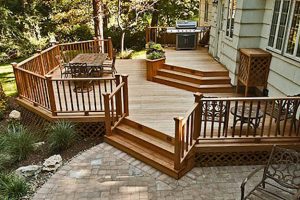
The financial return at resale is real, but the biggest value a deck provides is the years of daily use before you sell. Weeknight dinners outdoors, weekend entertaining, morning coffee, kids playing, working from home on the deck. These are the moments that justify the investment regardless of what happens at resale. A deck you enjoy for 10 years and then recovers 70 percent of the sale cost has delivered enormous total value. Build for how you live first, and let the resale return be a bonus. The homeowners who get the most out of their decks are the ones who build for daily enjoyment, not just for the listing photos.
Get Started
We build decks designed for both daily enjoyment and long-term value. Free on-site estimates across Austin and all surrounding areas. Schedule yours.